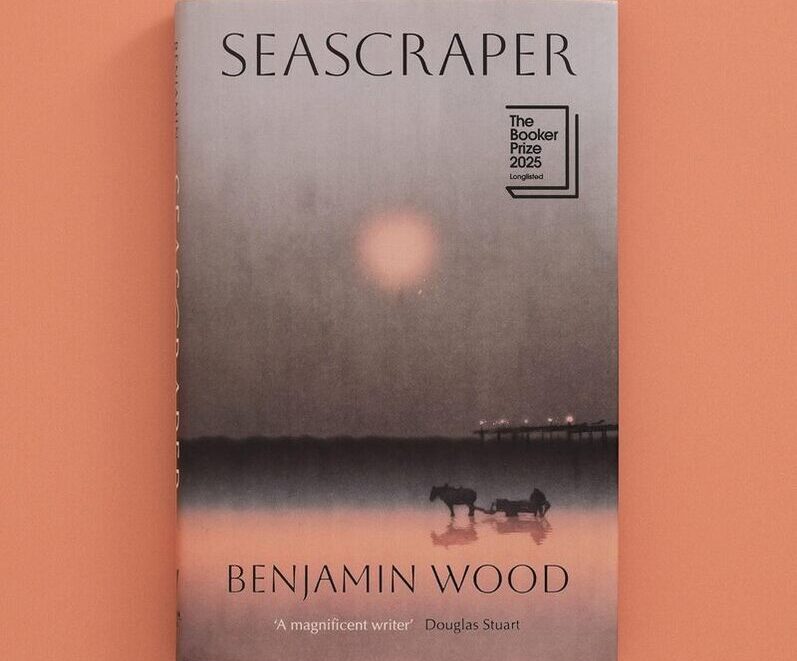
Back in the spring, during my first weeks as prose editor for PRISM, I was working in our office when I found myself distracted by the big shelves of PRISM back issues dating all the way back to 1.1 in 1959. I found it difficult to resist leafing through some of them.
I scanned through the tables of contents of some issues, looking for any names that might jump out to me. One did immediately: Benjamin Wood. I had recently finished his Booker-nominated novel Seascraper and had been extremely impressed.
It was exciting to discover that a writer whose work I’d enjoyed had once held the same editorial role I do now. There was something compelling about that sense of continuity. A small thread connecting different generations of PRISM editors.
That discovery felt like the perfect excuse to introduce myself on the blog and conduct an interview. I reached out to Ben, and he graciously agreed to chat.
I hope you enjoy our conversation.
Sincerely,
You were the fiction editor here at PRISM international in 2005/2006. What stands out to you now when you look back on your time at PRISM?
I will always remember the editorial board meetings we had. They lasted hours and usually involved a lot of pizza and root beer. They were the first time I had the experience of arguing the case for a particular piece of writing that wasn’t my own composition and having to deliver a robust defense for why I felt it worked when others weren’t so sure; other times, it was the reverse of that, and I’d have to sit there, chastened, while someone far more erudite than I was schooled me on the qualities of a work I had dismissed. I looked forward to those meetings so much. No other forum has allowed me to get so worked up about contemporary Canadian poetry since.
For people who may be unfamiliar, can you tell us a little bit about what you’ve been up to since completing your time at PRISM?
After my MFA, I tried to extend my visa to stay in Vancouver, but to no avail. I had fallen in love with Vancouver and felt almost fully Canadian for two and a bit years. Depressed, I returned to the arse-end of northwest England to live in my mother’s box room. From that point on, I was pretty dogged in my pursuit of a career as a writer and a teacher of creative writing. I’ve published five novels (The Bellwether Revivals, The Ecliptic, A Station on the Path to Somewhere Better, The Young Accomplice, and Seascraper), and taught fiction writing for almost twenty years (mostly at King’s College London). I’ve just about reached the point where I’m taking a break from teaching for a while and committing to being a full-time writer, which has always been the goal.
Your novel, Seascraper, was longlisted for the Booker Prize this past year. Huge congratulations to you! Can you tell us a bit about the novel and what it’s about?
Seascraper covers a day and a half in the life of a young man named Thomas Flett who lives in a place called Longferry, which is a fictionalised, scaled-down version of my hometown of Southport on the northwest coast of England. Thomas is what they used to call a “cart shanker”—that’s an old-fashioned kind of shrimp fisherman who rides out to the distant shallows at low tide with a horse and cart, often at the crack of dawn, and sometimes in the darkness of evening, no matter how dismal the weather. But Thomas also harbours a private aspiration to be a folk singer. We join him on a day when he returns from the beach, after a pretty meagre haul of shrimp, to find a stranger is in his front room, talking to his ma. This stranger is an American who claims to be a film director, and his sudden appearance promises to change the trajectory of Thomas’s life for the better, or so he hopes.
I really enjoyed the novel. It felt distinct from a lot of literature being published right now. How did you develop its concept, and what made you want to tell the story you did?
Thank you! The novel came from an instinct I had to write about the place I consider to be home, which was a subject I hadn’t really broached before. I grew up in Southport on the northwest coast, where the sea is famously withdrawn. It has the second-longest pier in Britain, but most days you could walk to the end of it without seeing any water at all. I was compelled by the thought that I might build the story of a character whose livelihood depends on the patterns of that sort of tide, who has to walk for miles every day just to reach the shallows. So I started to do some research into the local industries, and this led me to discover a lot about the shrimpers who used to thrive there. And that was enough to feed my imagination and give the story its momentum.
What are you most excited about working on next?
Well, I’m currently at work on the next novel, which will also be set in Longferry but in a different time period with a different set of characters. It’ll be the second book in what I’ve decided to pretentiously dub a ‘cycle’ of three Longferry novels. That’ll keep me busy for the next few years.
What advice would you give to other writers, editors, or MFA students who are just starting to shape their creative or editorial identities?
I think one of the most valuable times I had as a writer came after my MFA at UBC, when I spent several years engaged with reading all the fiction I had previously missed out on or consciously overlooked or thought would never resonate with me. The MFA programme instilled in me a love of reading other people’s fiction (mostly from my fellow students) and, without knowing it at the time, it had developed my critical and editorial muscles. It enabled me to not only enjoy reading fiction for its effects, but also to recognize the technical elements within it and to appreciate the mechanisms of good writing. So I went through a phase of applying this beyond the classroom, just reading as widely as I could and without any preconceived ideas as to what I would find. If I hadn’t learned how to read these books with the aim of dismantling them for how they were built, my own writing would’ve never improved beyond the state I had left it in during my time in Canada – which was probably somewhere in the awkward hinterland between promising and unconvincing. The early years of writing should be about (a) experimenting with narrative voices and styles and forms, finding which ones feel the most truthful and comfortable for you and (b) reading everything you can possibly read while you are doing (a).
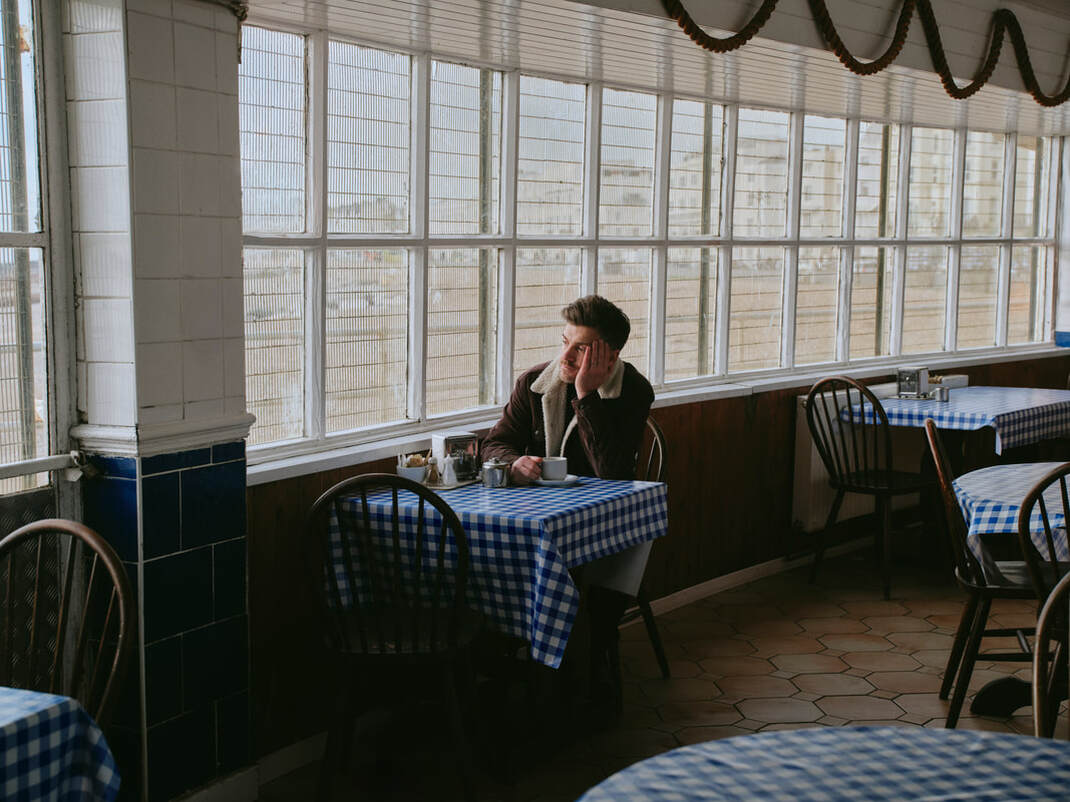
Benjamin Wood was born in 1981 and grew up in Merseyside. He is the author of five acclaimed novels, most recently SEASCRAPER, which won the Nero Book Award for Fiction and the Winston Graham Historical Prize and was longlisted for the Booker Prize in 2025. It is soon to be translated and released in twelve further languages. His first novel won France’s Prix du Roman Fnac in 2014 and his other works have been shortlisted for numerous awards, including the Sunday Times Young Writer of the Year, the Costa First Novel Award, the CWA Gold Dagger Award, the European Union Prize for Literature, the Commonwealth Book Award, and the RSL Encore Award. He has taught fiction and developed creative writing programmes at King’s College London and Birkbeck, University of London. He lives in Surrey with his wife and sons.