Today I have the privilege of sharing with you the Winner of Prism International’s 2025 Jacob Zilber Prize for Short Fiction, as chosen by judge Christina Cooke: Doll-House Dunes by Eve Cavanagh. This is a moving and original piece that I think you’ll really enjoy.
Doll-House Dunes
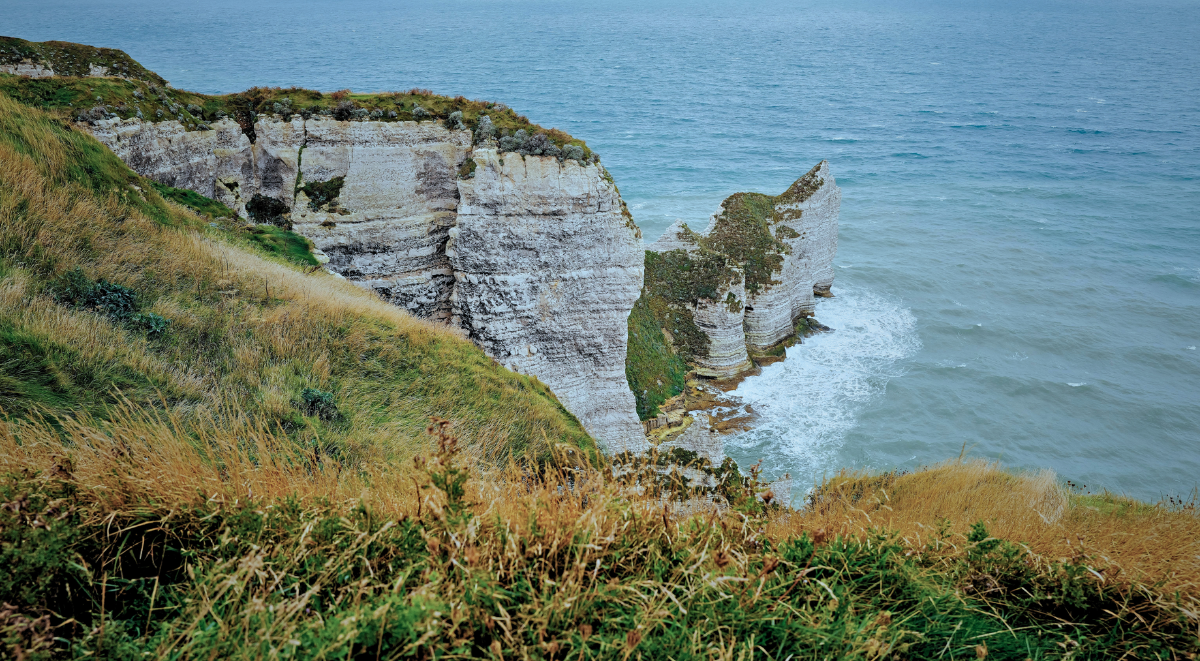
We lived in a house with no roots. Alone on the precipice of a tall, receding cliff: the only intermediary between us and the sea. Everything was falling apart, and Dev loved that. He loved that chimney swifts nested above our fireplace, unnerved but not dissuaded by the ashes below. He loved the dark creases in our birch-lined roof, our house like a paper airplane abandoned mid-fold. He loved its windows whipped by ocean breath, clouded and bent—how their faulty panes admitted silver drifts of sand that crept across floorboards, past closed doors, to nestle in our crevices, our fingernails and hair. The sand that thrummed its delirium against our parchment walls and filled our world with motion untethered from the sea. I’d dream, sometimes, that a swarm of insects had overtaken our room, and it was hard to hear Dev’s voice above the noise. Impossible to see his face past their flicker-winged veil. Trouble was coming, I knew, and prayed it hadn’t found him yet.
But when morning broke, there he’d be: sweeping night-sand past the doorway and crooning about the dunes. Dev loved the house because it loved us, though we were ruined too.
You’re smoking mugwort on the porch when Dev comes out, wringing the bottle above his head. It’s empty inside, the paper gone. “What is this, Dana, a eulogy?” His silhouette stoops ahead of you, blots red traces of dawn. You take another drag and thin grey wisps curl around his neck. “You weren’t supposed to find that,” you explain, though he knows that’s a lie. Every word you’ve ever written is for him.
The cliff retreated again last night. Its waterlogged veins split beneath your weight, reduced a limestone shelf to pieces, and hitched itself to sea. Off the edge, a half-rotted oak tree crumbled into oblivion. It sank a clutch of plovers with it, whose wings, still wet, couldn’t bargain with the wind. Dev slept undisturbed beside you, even as the bedframe lurched towards the door. The floorboards shrieked as if waking from a nightmare; the house echoed with shattered glass. It was the third collapse this week, each more terrible than the last.
Still in his bathrobe, Dev tiptoes towards the cliff’s new edge to assess the damage. He hesitates with each step, uncertain how far he can go before the ground collapses beneath his feet. Soft clouds of dust veil his calves, just beyond the reach of your white smoked breath. How easily he could trip on a branch, stumble on loose gravel, or take it a step too far. And that would be it for you; nothing left. With his hands propped on his hips, he’s like a kid who performs regality with a big stick instead of a cane. Suddenly, the wind picks up and billows his robe to expose bare ass. You don’t realize you’re laughing until Dev glances back at you, mimes Marilyn Monroe, shoots you a mischievous grin. How absurd it is to love in a world that hardly exists.
Last night, you lay stiff through the darkness, not a glint of moonlight to soften your fear. In your mind, the house teetered atop a jagged spire encircled by corkscrew tides and wicked eel thickets: carnal depths that pulsed and gyred for your flesh. The wind throbbed against the window panes. You held your breath until your empty lungs seethed. But at dawn, light splintered through the window to reveal a world still intact. Beside you, a spider was making its web in Dev’s hair. He slept that deeply.
In fact, it was the first time you’d seen him sleep peacefully in months. Ever since his father died, Dev had been plagued by nightmares. His body wailed through the darkest hours, thrashing to escape itself. At first you tried to wake him, but the hallucinations only pursued him into the waking world. He’d scramble across the bed in fear, as if you were strangers or hypnagogic foe. Rest evaded him. Purple bogs grew beneath his lashes, sanded with calcified tears.
He played it down in the mornings. Nope, no dreams, he’d answer if you asked. Then kiss your head, sorry if his sleep talk kept you up. Whatever painful dimensions summoned him at night, by morning he’d swallowed them. You wished he wouldn’t shield you from his suffering like that, but you would have done the same.
Dev became an expert in staying awake. His eyes grew brighter as dusk fell, lit internally by a secret sun. At night, he rearranged the house in strange new forms. Heaps of sand beneath the windows transformed into rutilant castles. Sea glass and animal skulls resurrected as driftwood mobiles that clattered above your head. The house was crowded with obsolete treasures you and Dev trawled from the sea. Silverfish skeletons, brittle as winter bone; a monocle attached to neither eye nor chain; enameled thimbles and windmill spoons; coins inscribed in languages you’d never understand. One morning, you woke to hundreds of mirror shards suspended from the ceiling with fishing wire, circled around a disintegrating wedding cake topper on a bait bucket plinth. The couple multiplied at odd angles in the reflections. Eroded limbs spun dizzy around the room. The dancers moved of their own accord, Dev insisted, independent of his restless will. The window was broken. He lifted your night dress with cold, calloused hands. Bodies shimmered in frost-coated mirrors, pale beneath layers of thick fractaled brine.
Perhaps this is why you didn’t wake him up last night. It was the first time you’d seen him sleep peacefully in months. Untroubled through the crash and after. It was as if his nightmares missed his body before he slept and manifested in the waking world instead.
You were shucking oysters in the kitchen when Dev’s father died. A three-inch blade pried the body open. Liquor disgorged from the severed lace hinge. Outside, Dev lit a fire. He boiled the meat with some nettle on the flames. When dinner was ready, you knocked on the bedroom door. Once, and then again. Dev’s father had been unwell for months at that point: skin sallow, often asleep. A retired fisherman, his biologically premature death came as no surprise to him. Each day his nose was buried deep in microplastic fish guts discolored with disease. You are what you eat.
The three of you built this house with scraps that floated through depopulated streets,
remnants of a town that had persisted years after the government deemed it “uninhabitable.” Most had nowhere to go, and so life went on until the levee broke. That day, livid water sank the road as you and Dev scrambled to reach higher ground. White peaks pursued you; the water hadn’t tasted enough flesh, yet, to blush. You held Dev’s hand until the hills, where you could gaze upon the wreckage from solid ground. Where desolation mixed with sparrow songs and the heartworn scent of pine.
From there, new shelters had to be found. Some of your surviving neighbours took refuge in the stucco ruins of Holy Land, the abandoned Christian theme-park whose stainless steel cross stands 50-feet tall, gleaming visible from miles away. You and Dev used to play hide-and-seek there as kids, stifling laughter in the dwarf-sized Tower of Babel, crouching behind John the Baptist’s plaster grave. Back then, the site was managed by a group of nuns who monitored the area for trespassers, determined that no one should witness God’s kingdom in such an abject state. On cloudless days, the cross is still visible from the cliff. You wonder what’s become of them.
The hardier evacuees headed west along the highway, asphalt warped by scrap metal and disuse. The road would take them to the city, a place that was only verging on collapse. This is what the last truckers said, before supplies stopped coming at all.
But Dev was raised on other myths. At night, his father regaled him with stories of his mother: a beautiful singer who slept all day and performed all night. She had crooked teeth, a four-octave voice, and a pharynx that quivered at the speed of light. When she sang, it sounded like a thousand bees had been stitched into a human throat. She died in a shipwreck when Dev was an infant. Dev’s father couldn’t imagine leaving the seaside. He believed the ocean retains all memories. One life bleeds into another, and nothing is lost.
The day he died, you wrote a letter to him in a plastic bottle and cast it out to sea. You’ve kept the practice up ever since. Writing to whom exactly, you’re not sure. Sometimes you imagine anthropologists from the future, white lab coats conducting research to find out what went wrong. Sometimes it’s a little girl across the ocean who continues to survive though she doesn’t know why. You imagine Dev’s mother sprawled on the ocean floor, black hair ribbonned above her head. She smiles with the knowledge that her son’s grown up alright.
The night went quiet after the crash. Chaos nulled by a flat, throbbing wind. Darkness closed in on you, obscured the dimensions of the room. The ceilings had always been low, but as you lay in bed, you could almost taste the metal of a broken chandelier dangled above your nose. Could the roof have collapsed without making a sound?
Shadows flitted across the room. Ink purple, tenebrous, and thick with intention. Spinning like a merry-go-round, they tiptoed the beams, sunk hollows in Dev’s cheeks, disappeared into ether and returned the same way. Surely they would dissipate, if only Dev would wake. Empty tuxedos waltzed with every dancer, remembered all the names. When it came your turn, they whispered sweet nothings and curved around your body like a spectral hand. You would have followed their intricate footwork into oblivion, let them sweep you into vague, dusky planes. They converged at the window, beckoning you to follow them. Temptation shattered reason. Nothing awaited you inside but a slow death. Even if the house didn’t fall that night, why shouldn’t it the next? The shadows promised you an easy out, relieved you from the burden of goodbye. You could walk out that window and not have to worry about survival, meaninglessness, the crushing guilt.
You brooded on this for a while, your illimitable reservoir of wretched fantasies. Poisonous valleys that flourished inside of you while violets wept at your feet. Then it occurred to you, peering over at Dev’s perfect sleeping body: I’d set the world on fire if it would keep this person safe.
For hours, you spun fictions and fantasies of Dev’s rise. In some, as soon as his eyes open, the nightmare ends. He holds you in his arms, and everything is okay. The sun beams and the birds sing. He sweeps away the sand. But in others, the mere disturbance of his waking tips the house over the edge. He rolls around, stretches his arms, and the house sways in turn. Gentle as a lullaby before eventually tipping lateral: guts scrambled, gravity screwed. Through the fall, you’d manage to embrace. One last kiss to say it all. Knowing you was the honor of my life. It was no small thing, this world we built together. I’ll look for you in everything, wherever we end up. Splat.
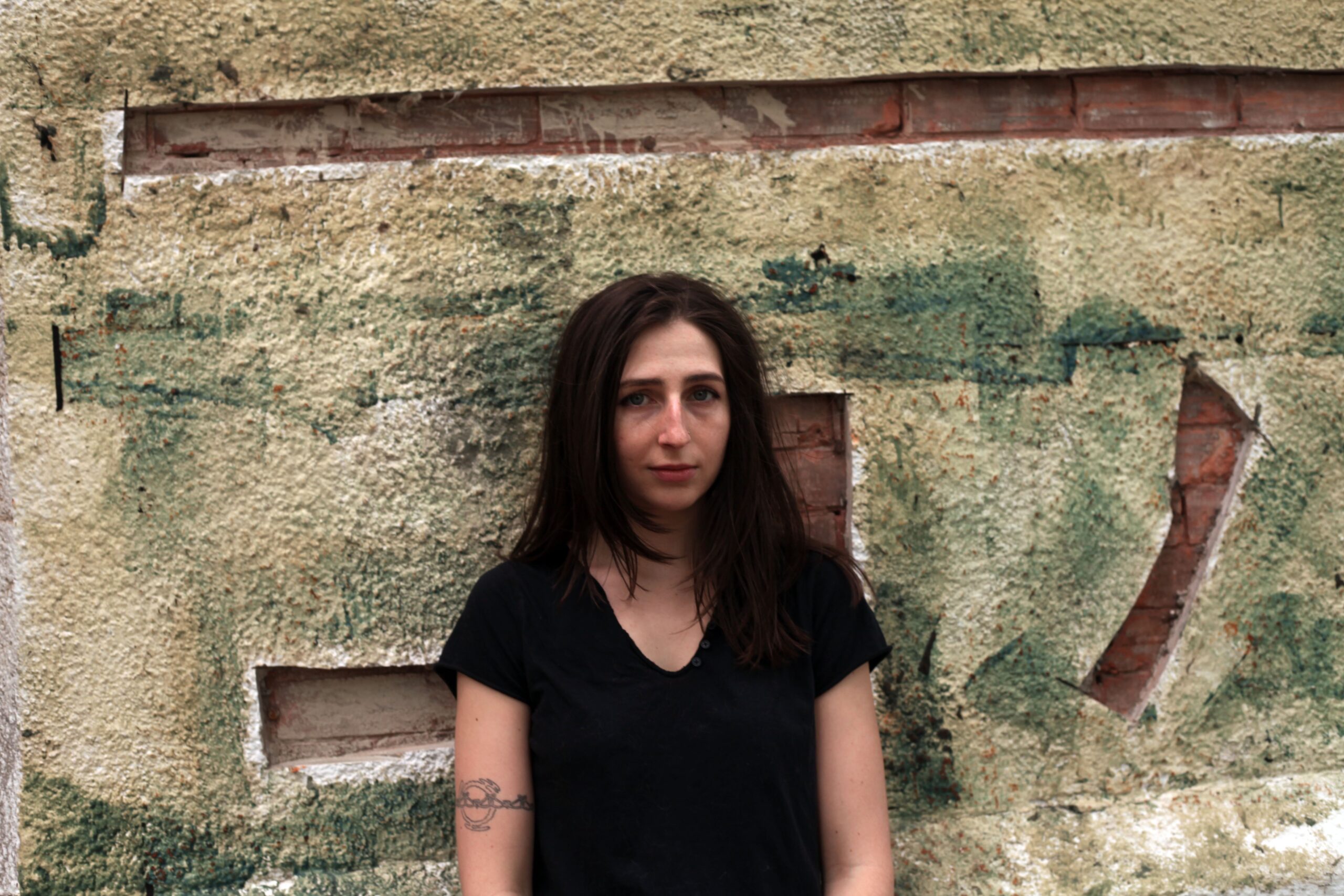
Eve Cavanagh lives in Montreal. Her fiction has been featured in Terrazzo Mag. Find her on Instagram (@boo2goose) or reach out by email (eve.a.cavanagh[at]gmail.com).