Hello, friends. Meet Adebe DeRango-Adem, a doctoral candidate in English at the University of Pennsylvania and author of two full-length poetry collections: Ex Nihilo, nominated for the prestigious Dylan Thomas Prize and Terra Incognita, which was a finalist for the 2015 Pat Lowther award. Her newest poetry collection is forthcoming from Mansfield Press. After reading Selina Boan’s Get to Know with Liz Howard, Adebe reached out and introduced herself. After reading some of her work online (her WordPress site is astounding), I asked if she’d like to be a part of the series.
Looking to prepare for your interview or brush up on some do’s and don’ts when interviewing? PRISM editorial assistant, Derrick Gravener, interviews poetry editor, Shazia Hafiz Ramji, to chat about the interview process. Shazia has interviewed authors such as André Alexis, Jonina Kirton, Thalia Field, and Jay Gamble, and shares steps for starting interviews as well as tried-and-true pro-tips.
In addition to providing resources for emerging writers on our website, PRISM is dedicated to featuring spaces and organizations that exist at the intersection of writing and community. Spaces that are essential to bridging the gap between what is uncertain and what is possible. Naturally, our attention turned to Massy Books, a 100% Indigenous-owned and operated bookstore. Currently, the store is located at 2206 Main Street, Vancouver, but will be moving to their new location of 229 E. Georgia St at the end of February. Though the new location will have a different layout, it will preserve its secret bookshelf door (built by carpenter Sam Grzesik, owner of S.G. Contracting and who also worked on the set of Harry Potter!). Other features include 14 ft high pipe shelving with semi-rolling ladders and a 500 sq. ft art gallery space upstairs.
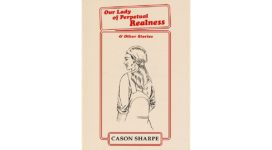
Cover of Our Lady of Perpetual Realness, Cason Sharpe’s début story collection. Metatron, 2017. Interview by Kyla Jamieson Get to Know is an interview series designed to introduce you to our favourite writers and contributors by way of questions that...
Welcome back to Between Us, a conversation series that explores how we define Canadian immigrant literature, and how writers’ journeys to Canada shape their work. Here, writers discuss the tensions and freedoms that come with access to stories of home-place, and the many ways immigrant stories contribute to the Canadian cultural imaginary.
Interview by Emma Cleary Welcome back to Between Us, a conversation series that spotlights immigrant/first-gen Canadian writers. In this second installment, we focus on hyphenated Canadian identities—writers born in Canada whose families also have roots elsewhere—and consider how place...
Thalia Field is from Chicago. She worked in theatre as a writer, director, and producer before beginning to write books. Thalia has lived and worked in Paris, Berlin, and New York, as well as spending many summers in Juneau,...
Our Poetry and Prose editors had a difficult time sifting through all this past year’s fantastic writing in search of our six nominees for The Pushcart Prize, but reminiscing about all of their favourite pieces was a bonus! Thank you to all the contributors who made the task both difficult and rewarding. Below is our list of nominations for the 2017 Pushcart Prize.
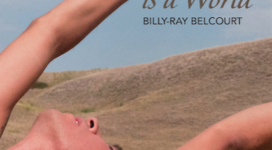
Billy-Ray Belcourt is from the Driftpile Cree Nation and is a PhD student in the Department of English & Film Studies at the University of Alberta. His work has been widely published in magazines across Canada,and he has been named by Tracey Lindberg as one of six Indigenous writers to watch. In Billy-Ray Belcourt’s debut poetry collection with Frontenac House, This Wound is a World, love answers heartbreak, “history lays itself bare” (42) and a world glimmering with decolonial love and queer, Indigenous possibilities is split open. This is poetry at its brightest. It is electric, profound, necessary work. Belcourt bends genre, challenging the cage of colonialism through a poetics of intimacy. It is a collection unafraid to ask questions, exploring grief, desire, queer sexuality and Indigeneity with tender honesty. Belcourt asks us to consider the ways Indigenous bodies can be simultaneously unbound and “rendered again,” (40) how worlds can be made and unmade. These are poems to be returned to again and again with reverence. PRISM editors, Jessica Johns and Selina Boan were thrilled to be able to sit down with Billy-Ray during his Vancouver book launch and chat about Indian Time, queer Indigenous futures, and the armpit as heaven’s wormhole.