Our “BAD” themed issue will be on stands soon, and includes work by some of Canada’s most talented and thought-provoking emerging writers. This issue is an invitation to reconsider our biases and values, and to test the limits of...
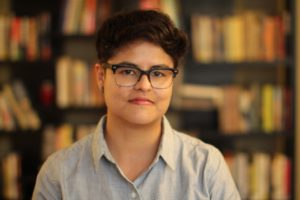
Emerging writer Marc Perez’s story “Dog Food” appears in our “BAD” issue. Of his story, Perez says, “I once had a dog, and I named her Bruce. The story is a lament for her.” For this issue, we sought work that took us to true places along difficult or unexpected paths; “Dog Food” is one such story. In it, a boy witnesses violence he’s helpless against, and is denied understanding in the aftermath. His pain is real, but nobody sees or acknowledges it; where can it go but forwards, into his future?
Marc Perez immigrated to Canada from the Philippines and now lives on the unceded territories of the Musqueam, Squamish, and Tsleil-Waututh First Nations. Perez has been working in the nonprofit industry for the past five years; in addition to this work he is currently participating in Writing Lives, a project in which writers collaborate with Holocaust survivors to write their memoirs. Read on for Perez’s thoughts on identity and home, privilege and marginalization, and the best time to write—while asleep and dreaming.
In the second half of The Boat People, a Sri Lankan immigrant—and former Tamil Tiger—poses a question to his Canadian-born niece: “What do you think happens when you terrorize a people, force them to flee, take away their options then put them in a cage all together?” (230).
The question is the ravaged heart of Sharon Bala’s remarkable debut novel, which chronicles the arrival of around 400 Tamil refugees on the coast of British Columbia in 2010. The refugees have fled persecution in Sri Lanka following the end of the twenty-six-year civil war and have come to Canada hoping for a warm welcome. These hopes are dashed when the Canadian government detains the refugees on the suspicion that some of them belong to the LTTE, also known as the Tamil Tigers, a listed terrorist organization. Eventually, some refugees are released and deemed “admissible” to Canada while others are deported back to Sri Lanka.
Buying books looked a lot different thirty years ago. If you wanted to know how good a book was, you read a newspaper, or asked your friends for recommendations. Then you had to find the physical copy on a...
Review by Rachel Jansen It would be a mistake to assume Cason Sharpe’s slim debut, Our Lady of Perpetual Realness & Other Stories, is a quick read. These stories are dense and complex, deserving of a slow eye and...
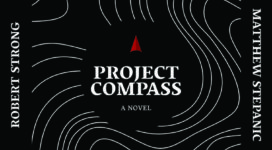
What do you get when you take four emerging Edmonton writers and give them each a quadrant of their city to explore? In Project Compass, publisher and editor Jason Lee Norman has assembled a crack crew to take readers on an odyssey through a city that, despite producing its fair share of writers, is rarely the explicit setting of their stories. The result is an engaging and emotionally-arresting collection of four concurrent novellas that all unwind on June 21, 2016. Starting from the north, south, east, and west, we follow four Edmontonians as they wander their way through the longest day of the year and reflect on the paths they have taken.
We received so many amazing poems for this year’s contest. We’re excited and honoured to announce the winners of this year’s Pacific Spirit Poetry Prize, as selected by Aisha Sasha John! You can read all three pieces in our Spring issue 56.3, so make sure to order a copy!
Our winter issue will be arriving soon, and includes a story by Yuly Restrepo Garcés, a writer and professor at the University of Tampa. A MacDowell Fellow, Yuly is also the recipient of a VONA/Voices Fellowship. Her fiction has appeared in Zone 3 and is forthcoming in Natural Bridge. Of her story, “The Decedent,” Yuly says:
I started to write “The Decedent” in May 2015, at the Ft. Lauderdale airport, during a seven-hour layover, though I had been thinking about it for at least a year before that. I wrote about twelve pages while I waited for my flight to Medellín, where I would spend the summer months visiting family and working on a rough draft of my novel-in-progress. The story itself is a convergence of several things I had been preoccupied with in the months before I started writing. Continue reading The Story Behind The Story: The Decedent by Yuly Restrepo Garcés
Congratulations to the writers shortlisted for the 2017 Pacific Spirit Poetry Prize contest! Check back soon for the winners announcement, chosen by this year’s contest judge, Aisha Sasha John!