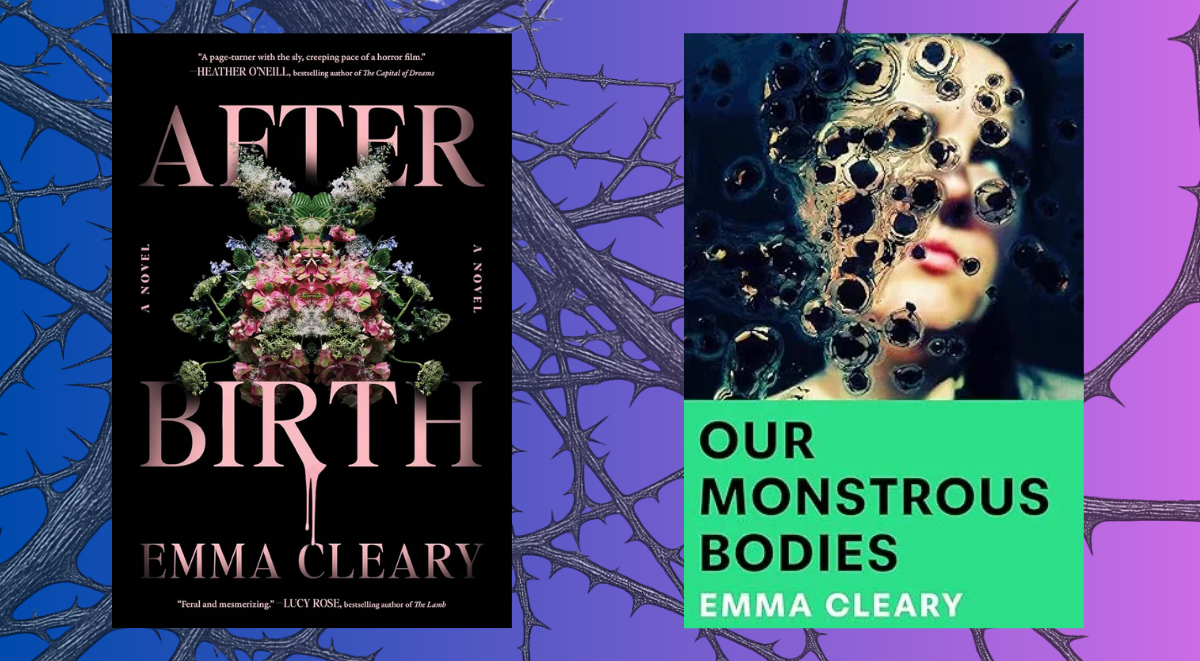
I had the pleasure of meeting Emma when she presented at the CRWR Faculty & Alumni Showcase, sharing an art-and-movie-recommendations-filled presentation on the creative research that fuelled her debut novel, Afterbirth. (Thanks for the new additions to my Letterboxd!)
Encountering the novel itself, however, was a different beast. Perhaps most people born in female bodies are, at some point, haunted by questions of pregnancy, change, and the body at the centre of it all. The novel layers an exploration of these questions over an intense emotional fracture between sisters; and yet, the familiarity of these themes does not quite account for the toe-curling atmosphere of unease and surrealism the book creates.
In the following interview, Emma Cleary reflects on the beginnings of her novel, her experiences as an editor, and where she is heading next!
Sincerely,
Zahra Mayeesha
Prose Editor
Your debut novel, Afterbirth, launched last month. Can you tell us a bit about it?
Afterbirth is a queer literary horror novel that follows two sisters, Brooke and Izzy Noone, as they navigate the aftermath of reproductive surgery and what it means to want, or not to want, to be a mother.
It begins with Brooke arriving in Vancouver after a breakup to help Izzy recover from surgery. So the sisters are both bruised in different ways. Izzy is living in this decaying apartment building that Brooke can’t quite find her way around, and an ominous figure known only as Medusa keeps appearing in unexpected places.
As Brooke nurses her sister’s wounds, the apartment becomes increasingly claustrophobic. She falls into revisiting the horror films her ex-girlfriend loved, and experiences unsettling physical symptoms as the horror writes itself onto her body—and begins to inhabit it.
At its heart, the novel is about the tangled love between sisters, the body’s threatened autonomy, and the strange seductions of art. It’s also grounded in familiar realities: the lingering effects of shame and coercive relationships, and the ways women are expected to minimize their pain or their desires, and to doubt their own bodies.
You were an editor here at PRISM international before becoming editor-in-chief at Geist magazine. What stands out to you now when you look back on your time at PRISM?
I began working at PRISM as a volunteer copyeditor, then became Prose Editor, and later returned as Managing Editor. I have lots of fond memories, and they’re all about the people I spent time with making something beautiful—the rest of the editorial team as well as the writers we published.
I loved the moments we collaborated most closely: discussing contest submissions while eating Wagon Wheels; piling into a taxi in a conference city with our suitcases crammed full of magazines to showcase; laying out pages on the floor with my talented co-editor, Molly Cross-Blanchard, to decide the order of the pieces. Writing poetry fortunes. Eating pizza on the roof in Philadelphia. That time we found a wasp’s nest in the ceiling.
The end of my first tenure overlapped with the early months of the pandemic, and I remember checking in with writers about how they were doing and receiving in return these beautiful, fraught, and strangely hopeful snapshots of life across the country.
How has your editorial experience shaped your process for developing novel-length fiction? Or vice versa?
I’m not sure I can draw a neat line between the two. Because I work for a lit mag, I’m editing pieces under 5,000 words, whereas writing a novel is long-haul stuff. Shorter forms offer greater freedom to be experimental, because any formal risks only need to sustain so much—it’s what I love about short stories, that daring. With a novel, you’re living with the consequences of your experiments for quite a long time. It may have made me a bit braver in my own writing, but the connection remains mysterious!
At Geist we mainly publish narrative non-fiction, so that gives me an organic separation between my editorial work and my fiction writing. But in both roles, I’m doing more or less the same thing: serving the work and listening closely to what the story is trying to tell me.
How did Afterbirth change from its initial concept to the eventual published work?
Afterbirth began life as a short story—it was actually the first piece I submitted to workshop on the MFA. At that point it was built around a power cut in Izzy’s apartment building, but even then a lot of the world of the novel was already there: the sisterly dynamic, Izzy’s surgery, Medusa, Brooke’s time in Japan, her doomed relationship with a horror cinephile, and those eerie “Babadook” vibes.
When I expanded the story into a novel for my thesis, I was initially interested in estrangement—from the people we live next door to, within our intimate relationships, and even from parts of ourselves.
As the manuscript developed, the story started to cohere around the relationship between the sisters and the idea of transformation. I wanted the novel to ask questions about the desires we suppress, or that are thwarted in some way. Where do they go? What if they keep growing? And how do they shape our most tender relationships?
What are you most excited about working on next?
I’m travelling for some book events in the early summer, and will be speaking about Afterbirth at Cymera in Edinburgh—perfect city for a horror festival! I’m working on a couple of novel projects that are quite different from each other, which I find really exciting—one’s historical and one’s speculative, one’s sweeping and one is more fragmentary in form. I’m hoping to do some research while I’m in the UK, as they’re both rooted there, in my home country.
What advice would you give to other writers or editors who are just starting to shape their creative or editorial identities?
Rather than thinking in terms of developing an editorial or writerly identity, I’ve found it more helpful to think about values, recognizing they may evolve over time in response to what feels urgent. For example, my editorial experience has made me more protective of writers’ distinctive voices, and of the idiosyncrasies of style and narrative digressions that make writing feel alive.
Much of my sense of who I am as a writer has come from following my own curiosity. So my advice would be to pay attention to what you naturally feel drawn to, and be inquisitive about why. I like to document this in a journal or even a simple list. Borrow from Orwell and inventory your pleasures—literary and otherwise—and notice the patterns that emerge.
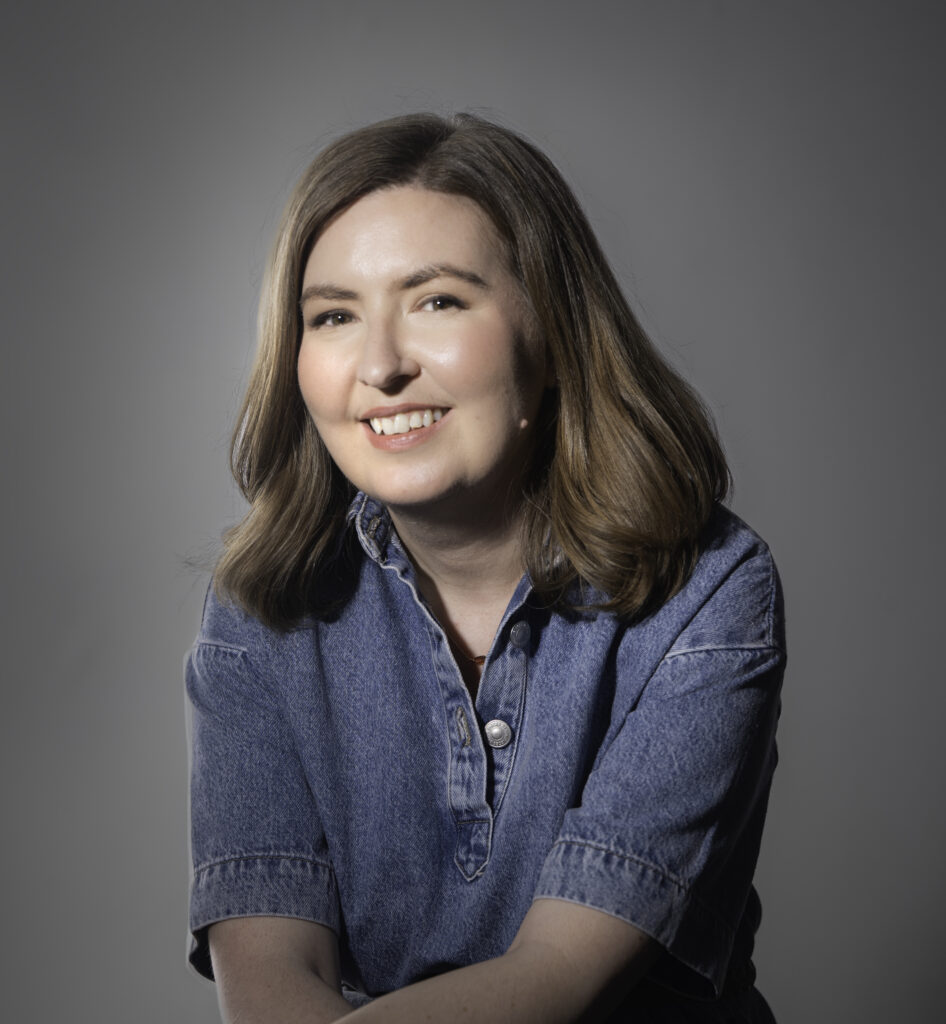
Emma Cleary is the author of Afterbirth (titled Our Monstrous Bodies in the UK) and editor-in-chief of Geist magazine. Her short fiction and essays have appeared in Best British Short Stories, James Baldwin Review, and Canadian Literature, among other publications. She holds a PhD in Literature from Staffordshire University and an MFA in Creative Writing from the University of British Columbia. Born and raised in Liverpool, she now lives with her family in Vancouver, BC.