
For this year’s Jacob Zilber Contest for Short Fiction, PRISM International was lucky enough to work with Molly Cross-Blanchard as a judge for our final shortlist. Molly was fair, thoughtful, and caring. Below is her judge’s essay about the winning and runner-up pieces.
Judge’s Essay: Molly Cross-Blanchard
One word I’d use to describe the experience of judging a literary contest is precarious. To rank an assemblage of excellent stories is extremely difficult. I found myself moving titles up and down, on and off the list for days, right up to the moment of submitting a final lineup.
There were elements of every shortlisted piece that attached themselves to me and haven’t let go since, like the threatening tension between a young woman standing in a pen for rabbits and the strange older man who led her there. The subtextual war between a starving (self-inflicted) couple who both hate and rely on each other to affirm their self-worth. A rising wall of rock that turns the theological promised land into a nightmare for one young boy. And certainly, in the Honourable Mention story “Baba Yaga Says You’ll Be So Loved,” the protagonist’s discovery that to be spoken about poorly behind your back may hurt, but to not be spoken of at all invokes a uniquely dispiriting loneliness.
All this to say: myriad iterations of the winners list exist, and I would hate for a submitter to think adversely of their work for not appearing on this one list, in this one moment. It is an exceptional list.
A word to describe the second runner-up – “Schoolboi” by Cletus Okoro – is enriching. This piece is told from the 1st-person perspective of a young resident of an island town, written fully in Nigerian Pidgin. This made it a challenging read, but not an alienating one. I felt ushered in by the narrative voice, not excluded. Seeking out translations and cultural context was a rewarding experience that allowed me to live a little while in Schoolboi’s fear of, and longing for, a portal to a new self, and to learn about a place touched by colonialism in familiar and wholly unfamiliar ways.
My word for “Trespasses” by Matt Hawkins, our runner-up, is stimulating. With its observational narration, peculiar imagery, and unexpected plot points, I didn’t always understand the why of this story about a fat monster who helps a university student solve the great math problems of our age. But as a poet who’s comfortable sitting with ambiguity, I didn’t need to understand. This story held my attention at every turn and still has me puzzling over its moral and metaphorical conclusions, which is exactly what good writing should do.
As much shifting happened within the ranking, the winning entry sat firmly in first place from the moment I read it. My word for “Bodies of Water” by Habiba Dokubo-Asari is pure, because that’s exactly what this story is – a slice-of-life moment that, from the outside, appears to be a quiet drop in the bucket of protagonist Onye’s life, a flash of struggle to be surmounted and moved on from. But inside her world, careful readers will understand that Onye is undergoing a world-upending shift in perspective, loud as water rushing past your ears.
Dokubo-Asari doesn’t rely on gimmicks or trends to tell this story of an island plagued by foreign oil extraction and a granddaughter who comes to understand the incorruptible power of ancestral stories, discovering a cord of kinship even death can’t cut. These high emotional stakes are accomplished through earnest, affective, and sound craftwork. Read “Bodies of Water” to see what’s possible for your own story if you can just locate the heart.
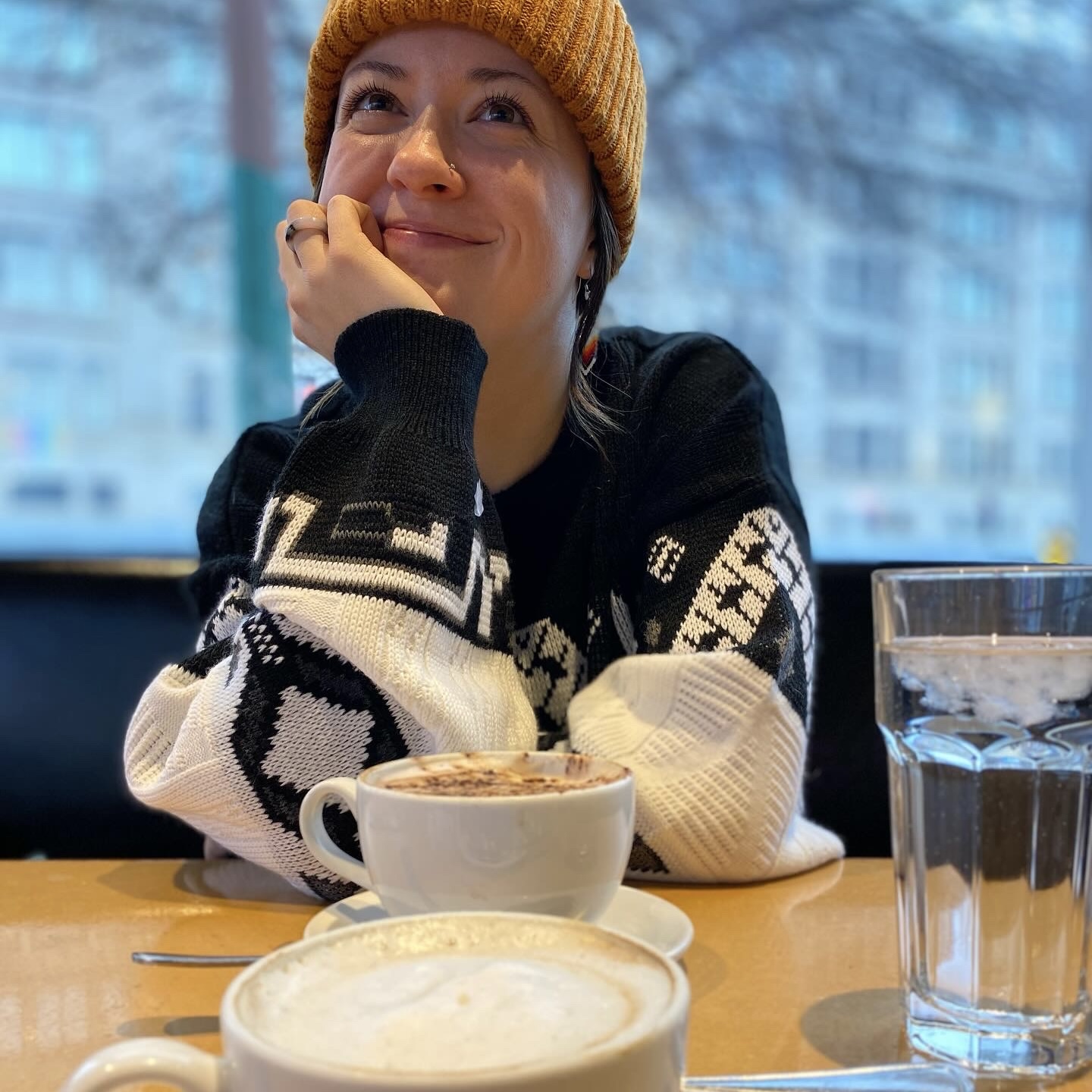
Molly Cross-Blanchard is a white and Métis writer and editor born on Treaty 3 territory (Fort Frances, ON), raised on Treaty 6 territory (Prince Albert, SK), and living on the unceded territories of the Musqueam, Squamish, and Tsleil-Waututh peoples (Vancouver, BC). She did an English BA at the University of Winnipeg and a Creative Writing MFA at UBC, and is now the publisher at Room magazine. Her debut poetry chapbook is I Don’t Want to Tell You, published with Rahila’s Ghost Press in 2018, and her debut full-length book of poetry is Exhibitionist, published with Coach House Books in 2021. Find out more at mollycrossblanchard.com or by following her on Twitter and Instagram (@mollyecb).